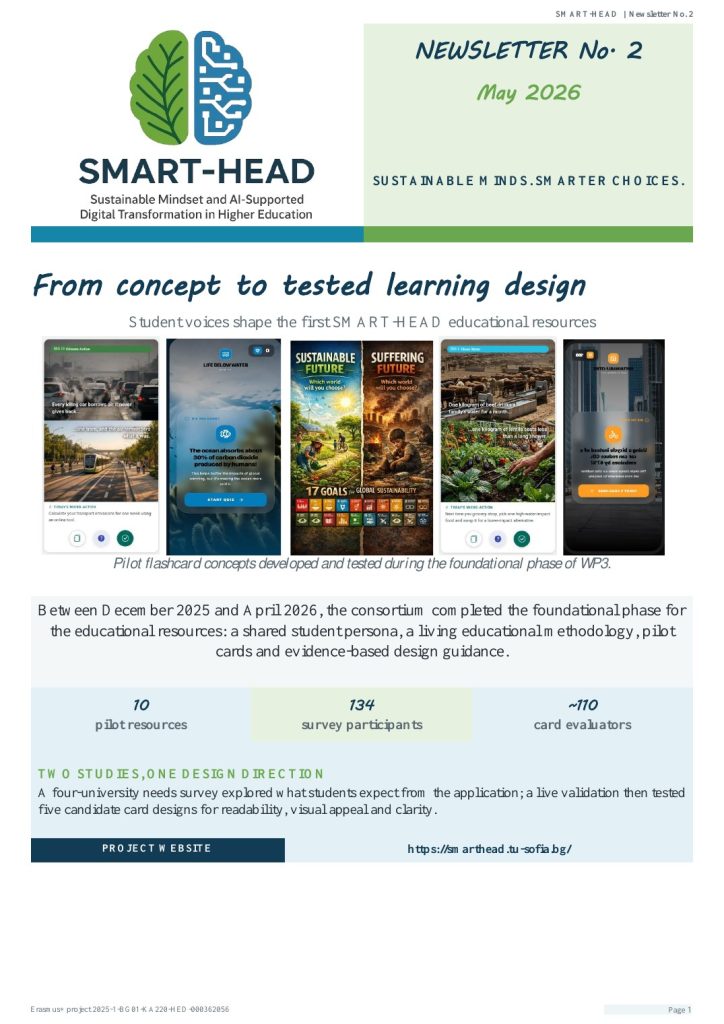
Between December 2025 and April 2026, the SMART-HEAD partners developed a shared learner profile, refined the project methodology and tested the first pilot sustainability cards with students.
134
Survey participants
10
Pilot resources
~110
Card evaluators
Students guide the design
Student participation was central to the process. The results provided practical guidance for the future SMART-HEAD digital ecosystem. Curiosity emerged as the strongest motivation for exploring sustainability content, followed by recommendations from teachers.
Students showed a clear preference for short learning materials, daily challenges and visible progress tracking.
What students want
- Short, clear and practical content
- Fresh daily learning activities
- Progress indicators, levels, points and badges
- Personalisation according to students’ interests
- Clean and minimal visual presentation
- Larger text, stronger contrast and reduced visual clutter
From feedback to implementation
Among the ten pilot resources, a bicycle challenge connected to sustainable mobility received the strongest student response. The cards achieved high scores for readability and clarity, while participants also suggested improvements to their visual design.
The partners therefore agreed to develop flexible, app-native templates. Each card will include a clear reference to a Sustainable Development Goal, a concise message and an opportunity to learn, complete a challenge or answer a question.
The next phase will focus on building the digital ecosystem, expanding the collection to 365 multilingual cards and developing monthly quizzes and practical micro-actions. Human and expert review will remain essential throughout the process.
Read the full publication
Download the complete SMART-HEAD Newsletter No. 2 – May 2026 in English.